
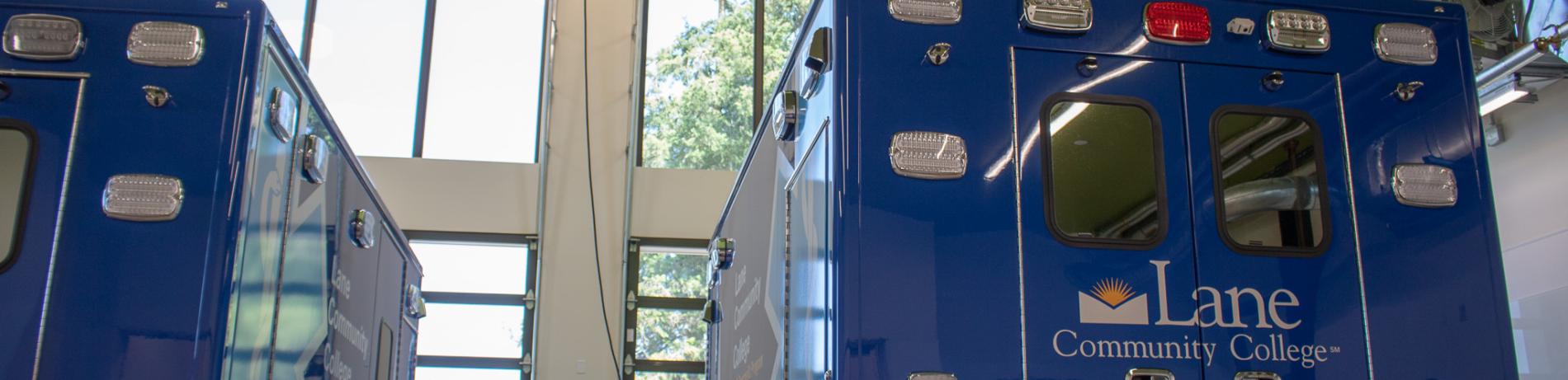
Prepare for a Career in Emergency Medicine
Lane Community College’s Emergency Medical Services (EMS) programs train you to work in emergency care before a patient reaches the hospital. You can start with entry-level EMT training or continue on to become a paramedic. We offer several paths, including credit and non-credit classes and continuing education.
You’ll get hands-on practice in labs, simulations, and real-world settings. These skills prepare you for certification and jobs with ambulance services, fire departments, hospitals, clinics, and other community health settings.
EMS pathways at Lane that align with your goals:
- Get started in EMS with basic emergency care skills
- Advance your training to intermediate or paramedic levels
- Build credentials with continuing education and specialty rescue courses
Our Programs
Choose from four pathways. From entry-level to advanced certification
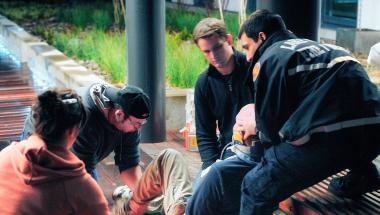
EMT
The foundation for most EMS careers. Prepares you for basic emergency medical care and certification. Choose from credit classes or noncredit classes.
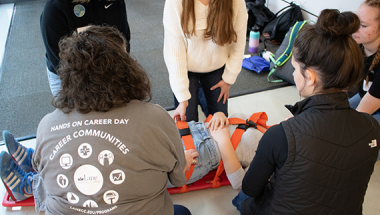
Advanced EMT (AEMT) & EMT Intermediate (EMTI)
For currently certified EMTs. Expand your clinical knowledge and skills with advanced life support training with noncredit classes.
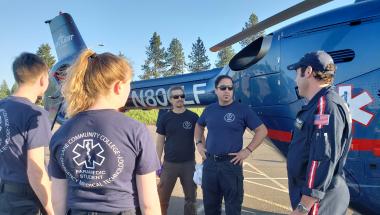
Paramedic
The highest EMS credential at Lane. Comprehensive advanced training in patient assessment, pharmacology, and medical procedures.
Continuing Education
Stay current or expand your skills. Courses include technical rescue, medical renewals, and Oregon required continuing education.
Comparison Chart
Program | Duration* | Format | Entry Requirements* | Outcome |
|---|---|---|---|---|
One term | In-person / Hybrid | High school diploma or GED; additional requirements apply* | Eligibility for Oregon EMT licensure | |
| Noncredit EMT | 5 weeks | In-person / Hybrid | High school diploma or GED; additional requirements apply* | Eligibility for Oregon EMT licensure |
Varies by term | In-person / Hybrid | Current Oregon EMT license; additional requirements apply* | Eligibility for Oregon AEMT / EMTI licensure | |
Multi-term program | In-person | Current EMT license; competitive application; prerequisites required* | Eligibility for Oregon Paramedic licensure |
*Note: Program prerequisites, licensure requirements, and pathways vary. Please check individual program pages or contact EMS advising for details.
New to EMS?
Start with the EMT program. Lane offers both credit and non-credit options depending on your goals.
Already an EMT?
Consider Advanced EMT (AEMT) & EMT Intermediate (EMTI) or the Paramedic track to advance your skills and career opportunities.

Certifications and Career Outcomes
Lane’s EMS programs help you get ready for the state and national exams you may need for a license. This can include Oregon Health Authority credentials and the National Registry of Emergency Medical Technicians (NREMT) where applicable.* Successful completion of these programs positions you for roles such as:
- EMT
- Advanced EMT
- Paramedic
- Emergency responder in clinical and community settings
*Exact certification outcomes depend on program level and current regulatory requirements.
How EMS Training Works
Your EMS education at Lane combines:
- Classroom instruction with health and science fundamentals
- Skills labs and simulation training
- Clinical and field experiences with partner agencies
Classes include day, evening, or weekend components depending on level and modality (online or in-person).
Frequently Asked Questions
Do I need EMT first before AEMT or Paramedic?
Yes, EMT foundational training is generally required. Advising can help you decide the best path.
Can I get financial aid?
Financial aid eligibility depends on program type (credit vs non-credit). Financial aid can help talk through your options. Some agencies will also pay for training for their EMS employees. Contact us to learn more.
What are the clinical requirements?
Clinical rotations are required for EMT, AEMT, and Paramedic programs. Locations and schedules vary.
Ready to Get Started?
- Meet with an advisor to confirm your pathway
- Apply to Lane and complete any prerequisites
- Explore financial aid and support services

Contact Us
Health Professions, Health, and Physical Education
4000 East 30th Ave.
Eugene, OR 97405
Division Office - Building 30, Lower Level, West Hallway
Lane is closed on Fridays in the summer.